Last Updated September 10, 2026
By Christopher P. Chaney, Esq.
When someone is detained by Immigration and Customs Enforcement (ICE), one of the first questions family members ask is: How can we get them released?
There is no single answer. Some detainees are eligible for a bond hearing before an immigration judge. Others are subject to mandatory detention. Some may seek release directly from ICE through parole or another form of custody review. And in certain cases, federal court may provide a way to challenge detention when the government claims that no bond hearing is available.
The starting point is therefore determining what legal authority ICE is using to detain the person and what form of release is legally available.
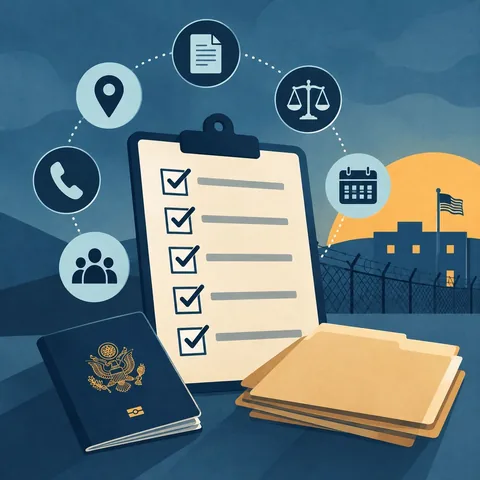
For practical steps families should take immediately following an ICE arrest, including locating the detainee and gathering immigration, criminal, and family records, see our companion article, 10 Things Family Members Should Do During the First Week of ICE Detention.
Can My Loved One Get an Immigration Bond?
Many people detained by ICE are held under INA § 236(a), which generally allows a detainee to request a bond hearing before an immigration judge.
A bond hearing is separate from the underlying removal case. The judge is not deciding whether the person will ultimately be allowed to remain in the United States. Instead, the principal questions are whether the person presents a danger to the community or a risk of flight.
The judge may consider family ties, length of residence, employment, immigration history, prior court appearances, criminal history, a stable residence, and the availability of immigration relief.
A strong sponsor can also be important. In Matter of Dobrotvorskii, 29 I&N Dec. 211 (BIA 2025), the BIA emphasized that a valid, reliable, and credible sponsor is relevant to determining flight risk. A good sponsor can establish where the detainee will live, what support will be available, and why the person can reasonably be expected to appear for future proceedings.
If bond is granted, the judge sets an amount required for release. Paying the bond does not end the removal case or grant immigration status. The person simply continues the case outside detention and must attend future hearings and comply with applicable ICE requirements.
But before any of this matters, the immigration judge must have legal authority to conduct the bond hearing. And that issue has changed significantly during the past year.
The Big 2025–2026 Bond Fight: People Who Entered Without Inspection
For many years, people arrested by ICE inside the United States after entering without inspection were commonly detained under § 236. Unless another mandatory-detention provision applied, they could request an immigration bond hearing.
The federal government changed that position in 2025.
In Matter of Yajure Hurtado, 29 I&N Dec. 216 (BIA 2025), the Board of Immigration Appeals held that a person present in the United States without having been admitted is detained under INA § 235(b)(2)(A) rather than § 236(a).
The distinction has enormous practical consequences. Section 235 detention generally does not provide for an immigration judge bond hearing.
Under Yajure Hurtado, someone who crossed the border without inspection could therefore be arrested by ICE years later and told that the immigration judge had no authority to release him on bond, even if he had lived in the United States for decades, had substantial family ties, and had no criminal history.
Federal courts have strongly pushed back against this interpretation.
The Fourth Circuit Has Now Rejected the Government's Broad "No Bond" Rule
This development is particularly important for detainees in North Carolina, South Carolina, Virginia, West Virginia, and Maryland, which are within the U.S. Court of Appeals for the Fourth Circuit.
On September 10, 2026, the Fourth Circuit issued its decision in Lopez Garcia v. Guadian, rejecting the government's argument that § 235(b)(2)(A) requires mandatory detention of people who entered without inspection and were later arrested by ICE after living in the United States for years.
Instead, the Fourth Circuit held that § 236 applies to noncitizens in that situation, regardless of how they originally entered the country.
That distinction can mean the difference between remaining in ICE custody without an immigration bond hearing and having an opportunity to ask an immigration judge for release.
The law remains contested nationally, and litigation continues in other jurisdictions. But for detention cases within the Fourth Circuit, Lopez Garcia is now extremely important when ICE claims that a longtime resident who originally entered without inspection is categorically ineligible for bond.
Who Is Still Subject to Mandatory Detention?
The Fourth Circuit's decision does not mean that everyone detained by ICE is entitled to bond.
INA § 236(c) requires detention of certain noncitizens based upon specified criminal, national-security, and related grounds. The Laken Riley Act, enacted in 2025, expanded mandatory detention to additional categories involving certain arrests, charges, and offenses. Arriving aliens and some other people detained under § 235 may also be outside an immigration judge's ordinary bond jurisdiction.
Criminal history therefore raises two different questions. First, does the criminal history make the person legally subject to mandatory detention? If not, the second question is whether the history causes the immigration judge to consider the person a danger to the community.
An arrest is not the same as a conviction, and an old conviction does not necessarily mean bond will be denied. The nature of the offense, disposition, age of the case, subsequent conduct, rehabilitation, and other circumstances may all matter.
What If ICE Says There Is "No Bond"?
This phrase can mean two very different things.
An immigration judge may have bond jurisdiction, conduct a hearing, and decide that the person should remain detained because of danger or flight risk. That is a discretionary bond decision.
A very different situation occurs when ICE or the immigration judge says that the judge has no jurisdiction to conduct a bond hearing at all. That is a legal question about the government's detention authority.
This distinction has become particularly important following Matter of Yajure Hurtado. In the Fourth Circuit, Lopez Garcia now provides powerful authority against applying the government's broad no-bond rule to people who entered without inspection but have been living inside the United States for years.
Depending upon the circumstances, unlawful detention may also be challenged through a petition for writ of habeas corpus under 28 U.S.C. § 2241 in federal district court.
Habeas is different from the immigration removal case. The immigration court determines removability and immigration relief; a federal court can address legal or constitutional challenges concerning the government's authority to detain the person.
So when ICE says "no bond," that is not necessarily the end of the analysis.
How Quickly Should We Request a Bond Hearing?
Detained immigration cases can move quickly, and families understandably want the earliest possible hearing.
But the earliest possible bond hearing is not always the best bond hearing.
There may be good reason to take additional time to obtain criminal dispositions, sponsor declarations, immigration records, medical evidence, or other documentation that significantly strengthens the request for release.
This is particularly important because after an immigration judge has made a bond determination, obtaining another bond hearing generally requires showing materially changed circumstances.
In some cases, requesting bond immediately makes sense. In others, several additional days of preparation may substantially improve the likelihood of release.
Can ICE Release Someone Without a Bond Hearing?
Sometimes. ICE has its own authority to make certain custody decisions. Depending upon the statutory basis for detention, a person may be released by DHS without first obtaining an immigration judge's bond order.
For some people detained under § 235, the relevant mechanism is parole under INA § 212(d)(5)(A) rather than immigration bond. Parole may be granted for urgent humanitarian reasons or significant public benefit, with medical issues, family circumstances, vulnerability, and other humanitarian considerations potentially relevant.
Bond and parole are therefore different forms of release, arising under different provisions of immigration law and generally decided by different government actors.
What If the Person Already Has a Final Removal Order?
A final removal order changes the analysis significantly.
Once a removal order becomes administratively final, detention is generally governed by INA § 241 rather than the ordinary pre-final-order detention provisions. In Matter of W-F-D-, 29 I&N Dec. 854 (BIA 2026), the BIA reaffirmed the limits on an immigration judge's authority to conduct custody redetermination proceedings for individuals detained under § 241.
A person with a final removal order therefore generally cannot simply request the same immigration bond hearing available under § 236(a).
Depending upon the circumstances, the strategy may instead involve DHS custody review, a motion to reopen, a stay of removal, a challenge to prolonged detention, or federal habeas litigation.
How We Approach a New ICE Detention Case
When reviewing a new detention case, we generally begin with four questions:
1. What legal authority is ICE using to detain this person?
2. Does an immigration judge have authority to order release?
3. If bond is available, what evidence gives us the strongest argument that the person is neither a danger nor a flight risk?
4. If the government says there is no right to a bond hearing, is there another way to challenge the detention?
The answers may lead to an immigration bond hearing, a request for release from ICE, parole, an appeal, federal habeas litigation, or another strategy.
Contact Chaney Immigration Law Firm
Immigration detention law has changed significantly during 2025 and 2026, and the legal landscape will likely continue to evolve. Because the availability of bond or other forms of release may depend on rapidly developing case law as well as the particular facts of the case, it is important to consult an experienced immigration attorney to determine what the current law provides and how it applies to your situation.
If you have any questions about the services or legal fees at Chaney Immigration Law Firm, please call and speak directly with a member of our legal team - (888) 880-9266.